
Executive Protection Dogs for High-Net-Worth Families: A Due Diligence Framework
How high-net-worth families should evaluate executive protection dogs — threat modeling, vendor vetting, liability, and integration into layered home security.
Protection for elevated risk
Protection-dog programs for executives, high-value homeowners, digital-asset holders, and families with a heightened threat profile.
Request a private assessment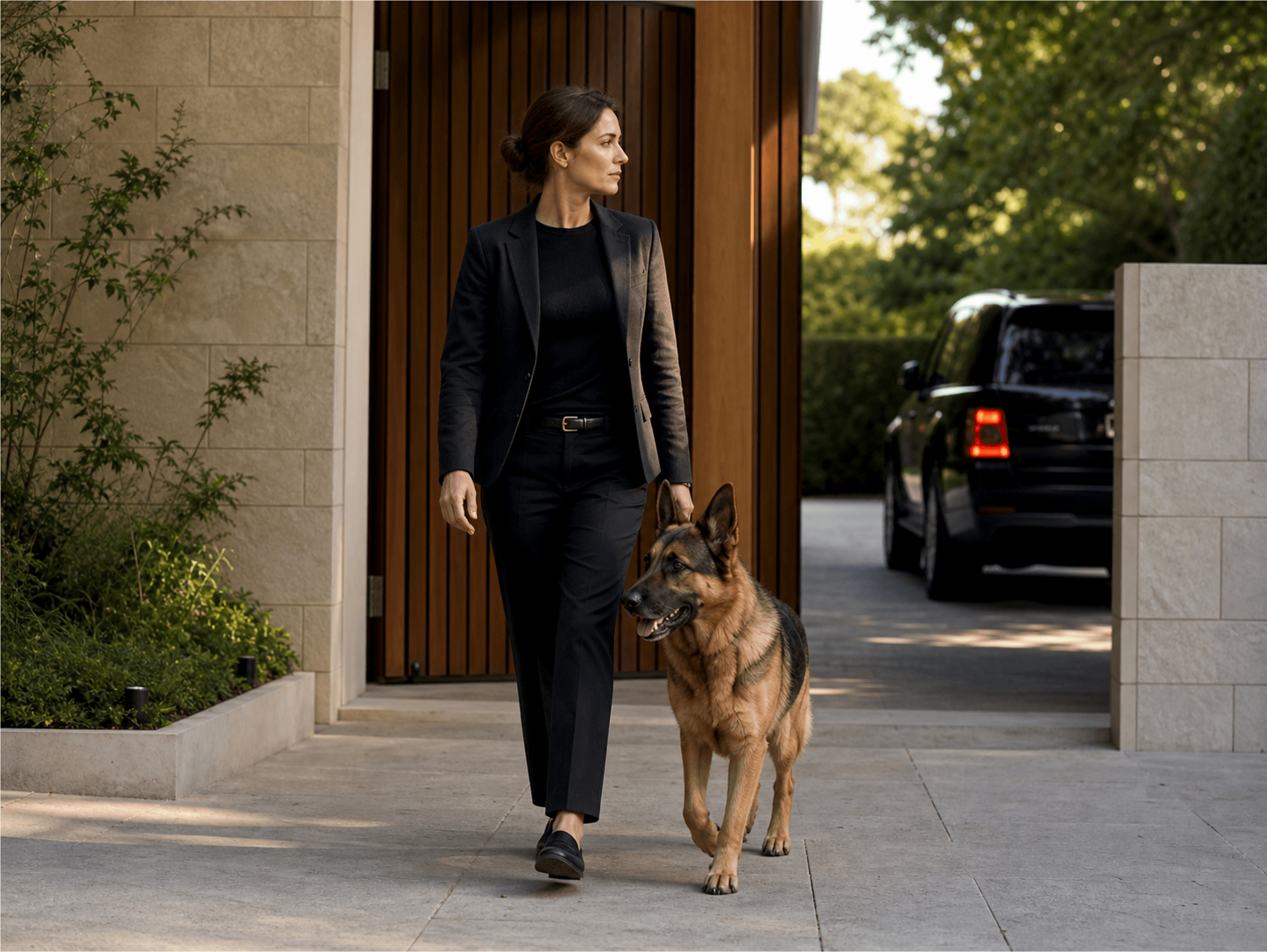
A layered program
The program is shaped around the places, people, and transitions that define your real exposure. A trained dog is one layer inside that wider plan.
Selection begins with the household, staff, visitors, property routines, and the environments the dog will encounter every day.
The assessment accounts for movement between homes, meetings, public events, and travel rather than treating the primary residence as the only operating environment.
The program can prepare a principal or family member as the handler or coordinate the K9 layer with an existing executive-protection team.
Follow-up training and check-ins keep the dog, handler, family, and wider protection plan aligned as routines and exposure change.

From Mark
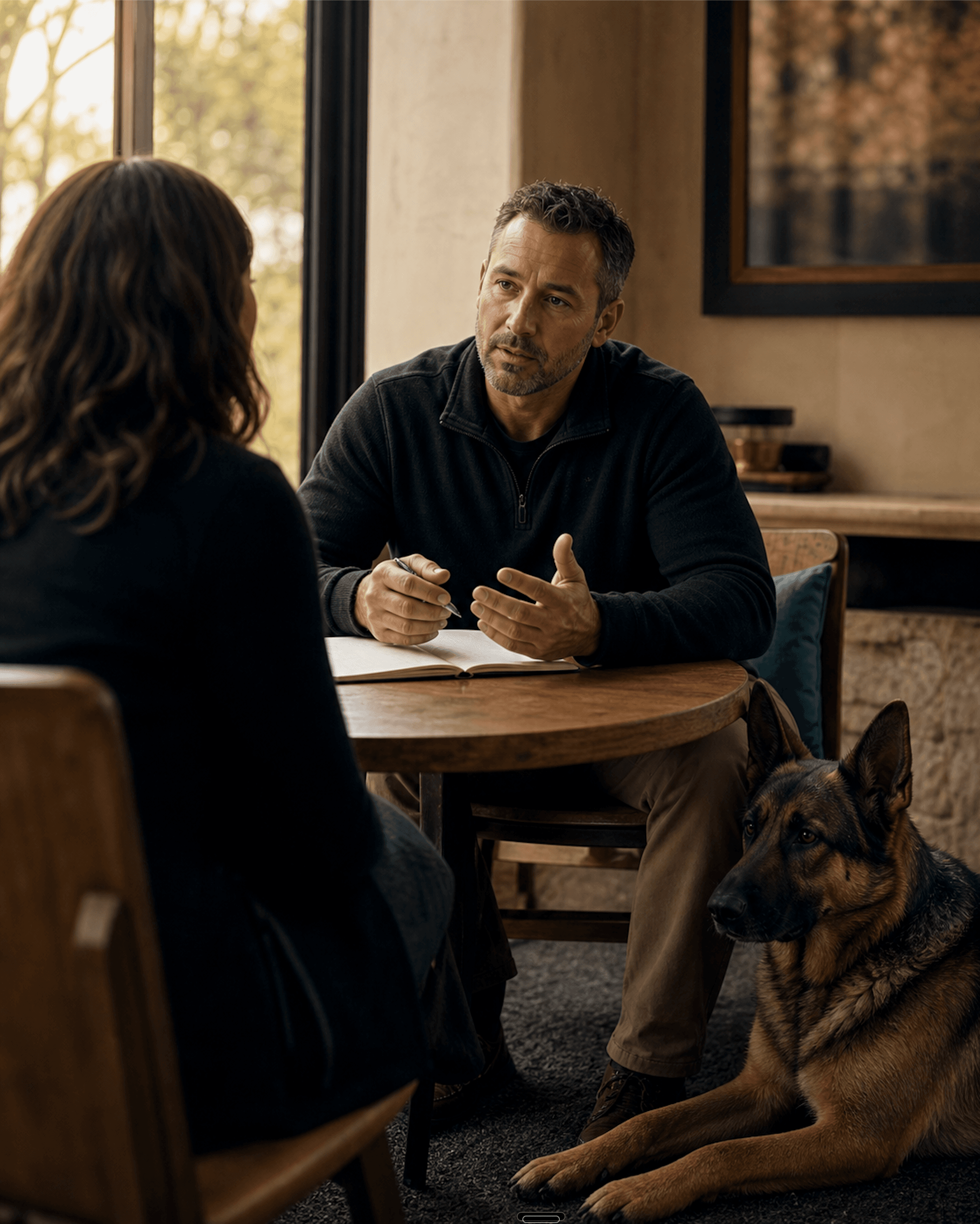
I do not begin with a dog and try to fit that dog into your world. I begin with the life, the movement, the people, and the responsibilities that need protection. Then we decide whether a K9 belongs in that system and what the right partnership requires.
Mark Bosque · Founder & CEO, K9XFactor
Begin with a private conversation about your routines, properties, travel, existing security, and the outcome you need. We will determine whether a K9XFactor program is the right fit.
Protection that moves with your life
K9XFactor provides tailored protection for executives, visible principals, high-value homeowners, and families with elevated risk. The objective is a discreet program that supports daily life rather than forcing life to operate around security.
Programs can range from a principal or family handling their own protection dog to coordination with an existing human security team. Assessment determines the appropriate dog, handler preparation, integration plan, and ongoing support.
One program across the places you live and move
Exposure can change between a primary residence, additional properties, public events, business travel, and family routines. The protection plan is shaped around those transitions, with privacy and discretion treated as operating requirements.
Support after placement
Placement is the beginning of the relationship. Ongoing check-ins and training help the dog, handler, family, and wider security plan adapt as routines and needs change.
What gets verified
Temperament, control, capability, travel, household routines, and the future handler are evaluated together—not as separate checkboxes.
The dog must have a clear role alongside people, technology, procedures, and existing security professionals.
Training and support must keep pace with new properties, family changes, travel, and shifts in exposure.
Security insights
Timely situations and durable lessons that help put this protection decision in context.
For this protection path
How high-net-worth families should evaluate executive protection dogs — threat modeling, vendor vetting, liability, and integration into layered home security.
For this protection path
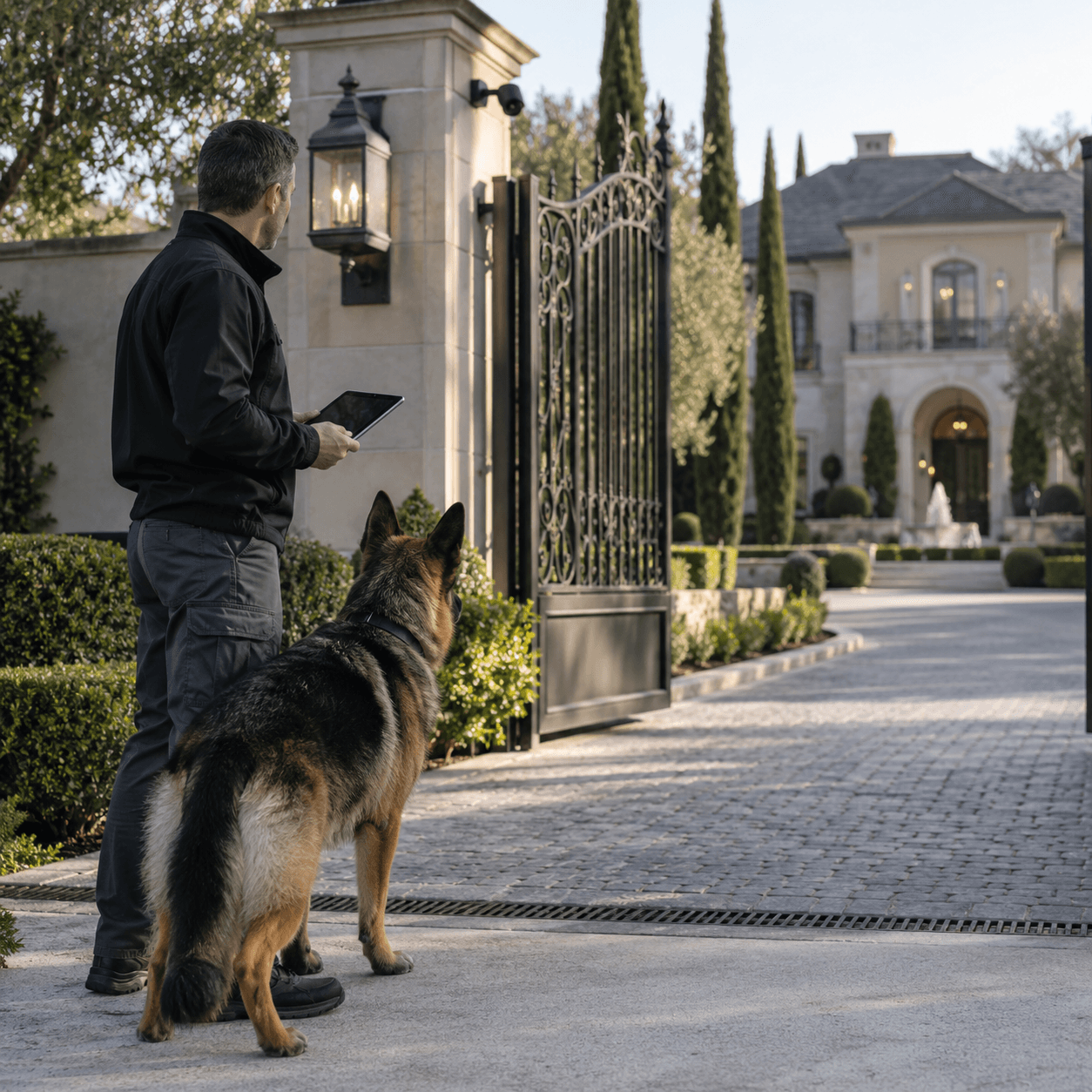
A residential-specific security risk assessment checklist for private estates — covering household access, smart systems, privacy law, and phased priorities.
Another perspective
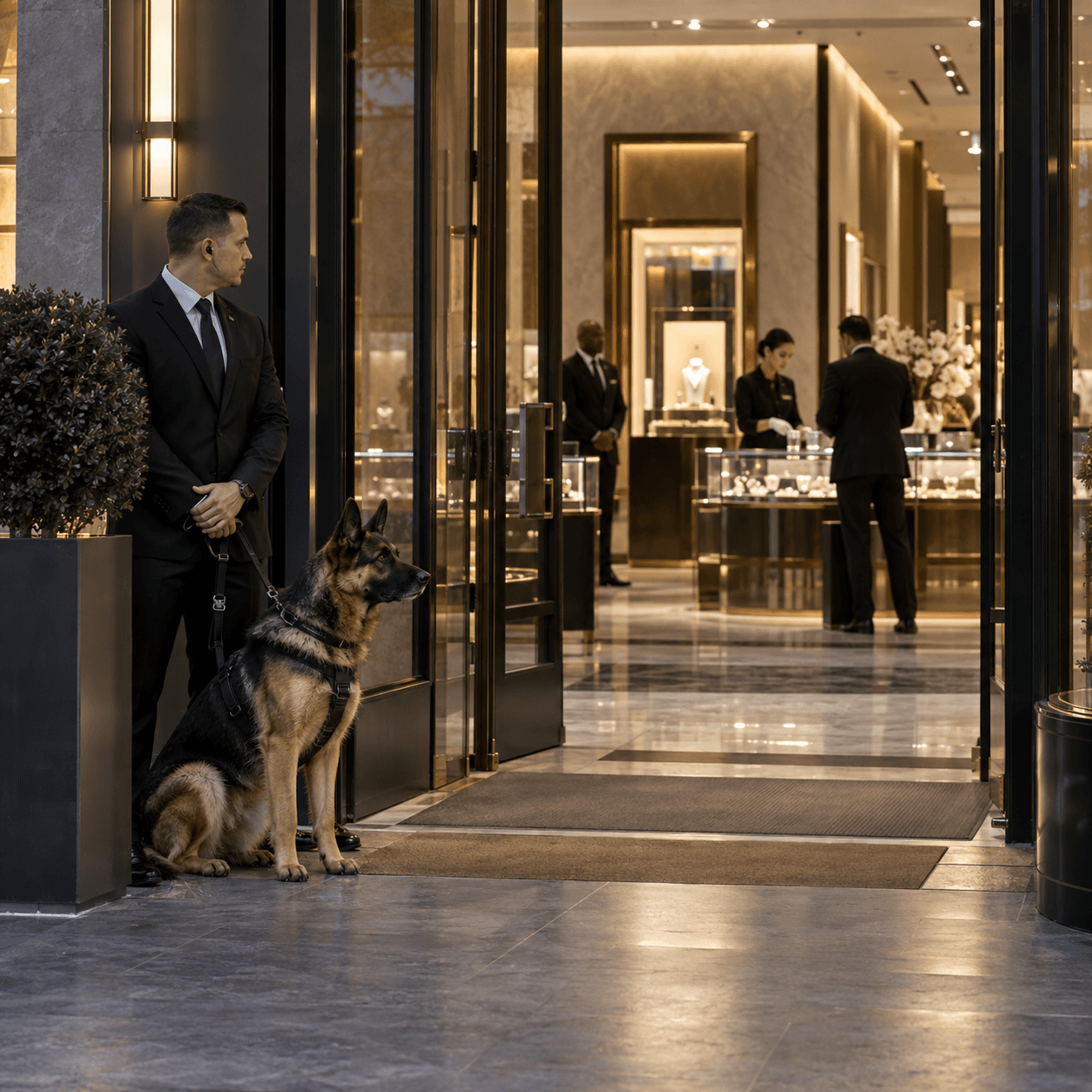
How luxury retailers can build a layered security approach — perimeter, access, detection, response, and digital — in the right order, with budget and compliance guidance.
Questions, answered
Every program begins with the person, family, property, and routines—not a preset package.
A properly selected and trained dog should integrate into ordinary movement, travel, and public settings without creating unnecessary attention. The assessment considers temperament, handling, routines, and the environments the dog will regularly encounter.
Some clients become the primary handler, while others coordinate the dog with professional handlers or an existing security team. The correct structure depends on experience, schedule, household, travel, and the protection objective.
A protection dog is one layer in a broader security plan, not a universal replacement for people, technology, or procedures. The value is continuous presence, deterrence, detection, and a trained response that remains integrated with daily life.
The initial assessment maps the locations, movement patterns, family members, support staff, and environments involved. Selection and integration are then planned for those real conditions instead of a single idealized setting.
K9XFactor provides ongoing check-ins and training support so handling, household integration, and the wider protection plan can evolve as the client’s routines and needs change.
A private first step
No two homes, families, or protection needs are the same. We’ll begin with the realities of your life and determine whether a K9XFactor program is the right fit.