A Layered Security Approach for Luxury Retail Stores: How to Sequence Your Five Layers
How luxury retailers can build a layered security approach — perimeter, access, detection, response, and digital — in the right order, with budget and compliance guidance.
 By Mark Bosque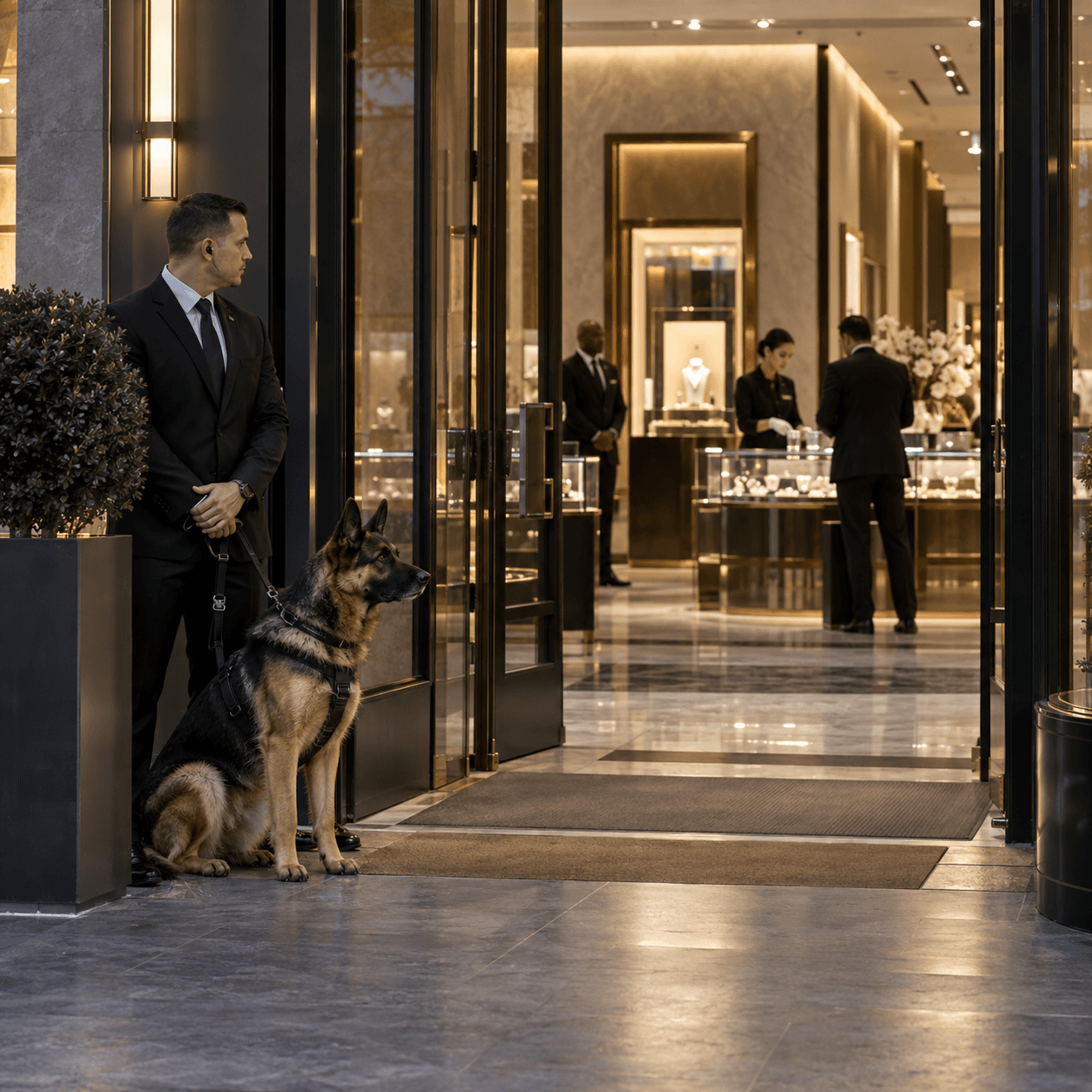
A Layered Security Approach for Luxury Retail Stores: How to Sequence Your Five Layers
You have a quote on your desk for cameras. Another for an alarm upgrade. Someone has recommended access control at the stockroom door, and your insurer has asked a question you're not sure how to answer. Each proposal looks reasonable on its own. What nobody has told you is which one to do first.
That ordering question is the whole problem. A layered security approach for luxury retail stores is not a shopping list — it's a sequence, and the sequence depends on your specific building, your hours, and how your inventory actually moves. Two boutiques with identical floor plans can have entirely different weakest links, which means identical purchases produce very different results.
What follows is how to read your own risk pattern, what each of the five layers is actually for, and how to order the work so that the money you spend closes the gap that matters instead of the gap that was easiest to quote.
Reading the Threat Pattern Before You Buy Anything

Organized retail crime is not opportunistic in the way most people assume. It follows economics. Certain categories — handbags, watches, small high-value leather goods — hold resale value with almost no depreciation, move through established fencing channels, and require no specialist knowledge to convert to cash. That liquidity is what makes a store worth studying.
And study is the operative word. Target selection tends to reward predictability and exposure, not the absence of security signage. A store with a fixed closing routine, a single staff member handling the final walk-through, and a clear line from the display case to an unmonitored exit presents a workable plan. A store with the same signage and less predictability does not.
There are usually two loss curves running in the same building. The first is fast and high-consequence: a smash-and-grab, a distraction team, an after-hours entry. The second is slow — internal shrink, return fraud, inventory that walks out over months through paperwork rather than a broken door. These curves respond to entirely different controls, which is why a single product line never closes both. Cameras built for the second problem are often sold as an answer to the first.
That gap matters. Cameras and alarms are excellent at establishing what happened. Detection is not deterrence. The distance between an alert firing and a decision-maker physically on scene is measured in minutes, and minutes are enough for a crew that has already rehearsed the exit. A layered plan exists to compress that interval — through presence, through response, through design.
A proactive vulnerability audit works at the strategic level before anything is recommended. We look at traffic and sightline patterns, cash and inventory cycles, opening and closing rhythms, vendor and delivery access, and — critically — how the store reads to someone evaluating it from the sidewalk. That assessment determines the sequence. Buying first and assessing later inverts the process, and the cost shows up later.
The Five Layers, In Build Order
Once you can see the pattern, the layers stop being product categories and start being jobs. Each layer has one.
Perimeter slows and complicates approach. Access controls who reaches what. Detection tells you something is wrong early and accurately. Response puts trained judgment on scene. Digital protects payment data, client records, and the systems that hold them.
The sequencing question most guidance skips is not which layer matters most. It is which layer collapses without the others. Detection without response produces evidence, not prevention — you get a clear recording of something you could not stop. Access control without a maintained perimeter protects the wrong boundary, securing an interior door while the actual approach route stays open. Digital protections built on top of unmanaged physical access are only as strong as the room the server sits in.
Where you start depends on your weakest link, and that varies by store type.
A street-level flagship with glass frontage usually has a perimeter problem first — visibility, approach speed, and after-hours exposure all concentrate there. A mall-interior boutique often cannot control its own perimeter at all; the landlord does. That shifts the first investment toward access and detection inside the demised space, plus a clear understanding of what mall security will and will not do. High-cash or high-density-inventory locations tend to have a response gap: the risk is time-sensitive, and cameras do not shorten arrival time.
Three ordering mistakes recur.
The first is buying the most visible technology first because it feels like progress. The second is confusing redundancy with layering — four cameras covering the same sightline is redundancy; a camera, a controlled door, and a trained handler are layers. The third is adding systems that cannot share information with what is already installed, so nothing correlates and staff end up monitoring three interfaces during the moment they can least afford to.
A private assessment sorts this quickly, because the answer is specific to the building, the inventory, and the hours you keep.
Funding, Vendor Selection, and the Compliance Layer
With the sequence settled, the next conversation is usually about money — and that conversation goes wrong early.
Most luxury retail security budgets get argued on the wrong number. Cost per recovered item is a poor frame — recovery is rare, and it ignores what a single incident actually costs you. Model cost per prevented event instead, and add the cost of operational downtime: a closed floor, a police report, a staff team that needs a week to steady. Then set that figure against your insurance requirements, your deductible exposure, and what it costs to replace associates who no longer feel safe at work. Turnover after a frightening incident is a real line item, and it rarely appears in the security proposal.
Inside any single layer, competing solutions look similar until you ask better questions. Does it integrate on open standards, or does it lock you to one vendor's roadmap? What is the ongoing monitoring cost over five years, not the hardware price today? How much false-alarm burden lands on your staff — and on the police response you'll need to be credible when it matters? What is the service and maintenance response time in writing? And who owns the data: you, or the provider?
Bring counsel in before procurement, not after installation. Surveillance and recording notice requirements vary. Biometric consent rules vary more, and the penalties in some jurisdictions are meaningful. Retention limits deserve a written policy rather than a default setting. Employee monitoring sits on separate legal footing from customer-facing surveillance, and treating them as one system is a common, avoidable mistake.
Finally, treat the digital layer as a peer to the physical ones. Point-of-sale and payment fraud, clienteling files and appointment records on high-net-worth customers, credential hygiene across a team with turnover, and third-party vendor access to your store network — these are protective concerns, not IT housekeeping. A client's purchase history and appointment schedule is, in the wrong hands, a targeting document.
Where Human Judgment and K9 Presence Make the Other Layers Work
Hardware gets specified first because it's easy to quote. The layer most often skipped is the one that determines whether any of it matters: people.
That means hiring and vetting standards that hold up over time. Defined roles during an incident — who moves toward the client, who moves toward the door, who makes the call. De-escalation training, because most confrontations on a luxury floor are resolved by tone and spacing long before anything else is needed. And rehearsed communication, so staff aren't improvising while a system is already alerting.
A handler-led K9 Guardian contributes something no camera or lock can. It changes target-selection math before an event. Someone assessing your store as an opportunity reads a controlled dog and a competent handler as a variable they can't plan around, and they move on. Note the words: temperament-tested, controlled, appropriate to a sales floor. A luxury environment doesn't need a hardened posture. It needs quiet capability that a client walking in barely registers as security at all.
Sequencing this without disrupting operations is straightforward when it's phased:
- Assess. Understand the actual risk pattern for this location, footprint, and neighborhood.
- Close the highest-consequence gap first. Not the cheapest, not the most visible.
- Integrate. Make each layer inform the others — detection tells people something useful, people know what to do with it.
- Rehearse. A plan nobody has practiced is a document, not a response.
- Reassess on a set cadence. Footprint changes. So do surrounding conditions.
Bringing the Layers Into Order
The lesson underneath all of this is simple enough to hold onto: layers only work in relation to each other, and the order you build them in is a judgment call about your specific store — not a default configuration.
On the protection path, this work belongs with organizations, and specifically with multi-location and cash-intensive operations, where consequence concentrates and improvisation costs the most. What those environments need is not more equipment. It's a clear read on the weakest link, a sequence that closes the highest-consequence gap first, and people trained to act on what the systems tell them.
Which is why the correct first step is not a product quote. A quote assumes the answer before anyone has looked at your floor, your hours, your inventory movement, or your staff. The assessment establishes what you actually need. Everything else follows from it.
When you're ready to work out the right sequence for your locations, request a private assessment.
A private first step
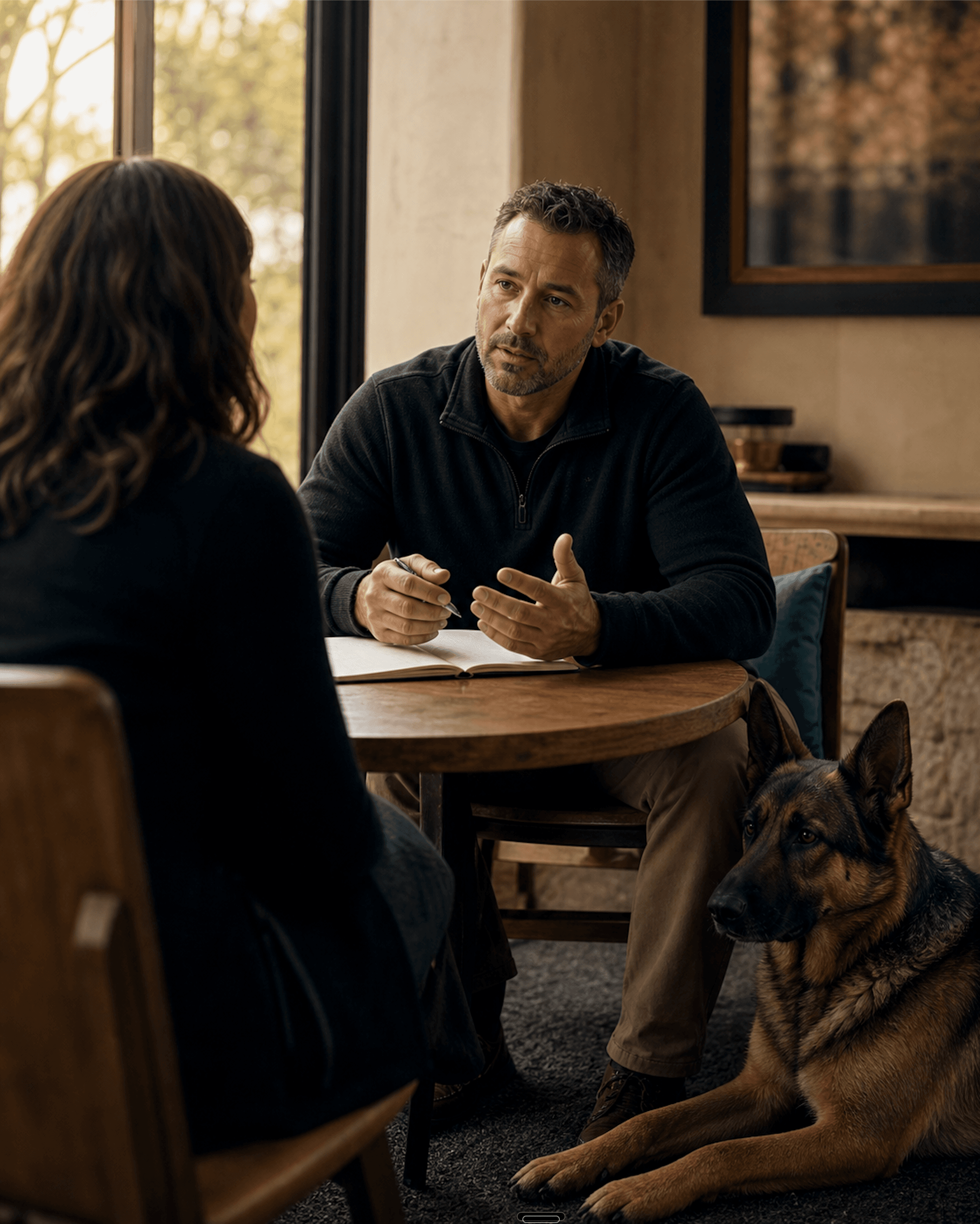
Start with a private conversation about your security.
No two homes, families, or protection needs are the same. We’ll begin with the realities of your life and determine whether a K9XFactor program is the right fit.