
K9 Security in Healthcare Facilities: A Decision Framework for Deterrence That Fits Your Site
How healthcare security leaders evaluate K9 deterrence — threat patterns K9s address, facility-fit criteria, handler standards, and integration mistakes.
Healthcare security
Healthcare facilities balance open access, patient dignity, staff safety, and uninterrupted care. K9XFactor begins by determining whether a calm, professionally managed K9 capability can responsibly strengthen the security already in place.
Request a healthcare security consultation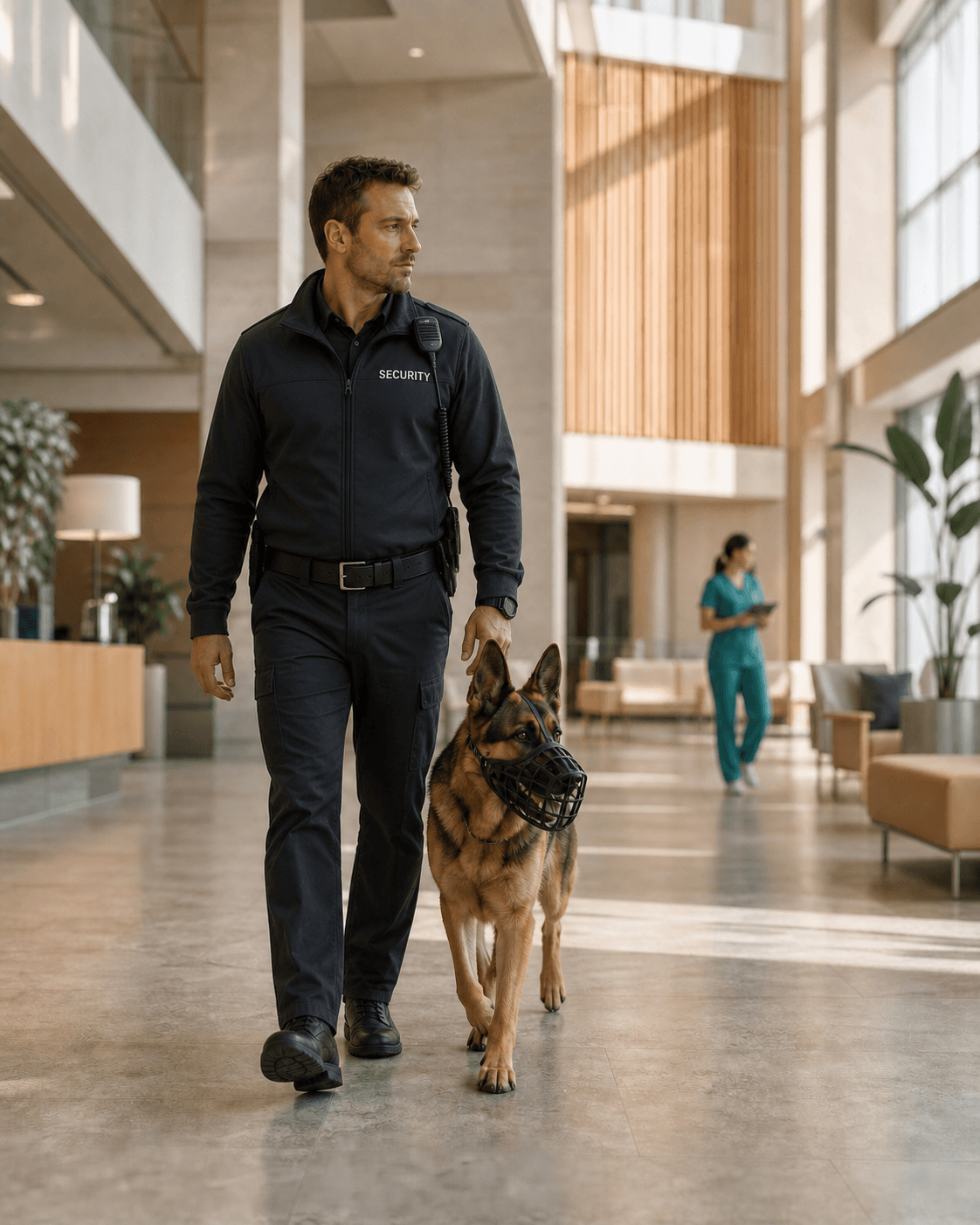
A layered program
The correct solution starts with operations and governance—not a standard security package. The facility, its people, and its existing program define the role a K9 may responsibly play.
Public access, patient populations, staff workflows, legal requirements, animal welfare, and the current security program are evaluated before a K9 capability is recommended.
The K9 layer must have a defined role alongside security personnel, clinical leadership, procedures, technology, and emergency planning.
Selection and preparation account for noise, movement, visitors, staff interaction, and the need to support safety without becoming a source of disruption.
Handler practice, review, and continued training help the program remain aligned as facilities, teams, and operating conditions change.

From Mark
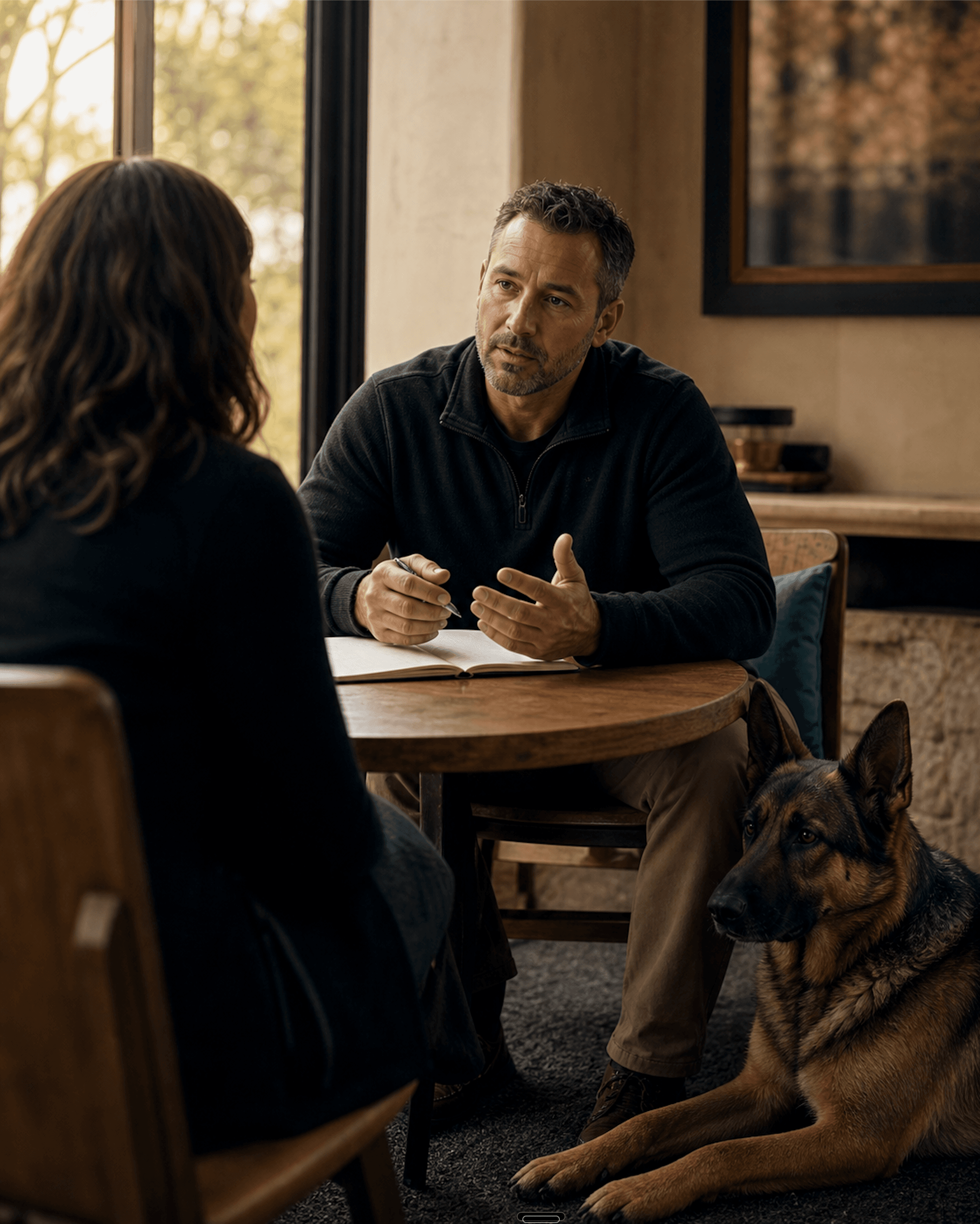
I do not begin by assuming a dog belongs in a healthcare environment. I begin with the people, the flow of care, the security team, and the responsibilities the facility already carries. If a K9 belongs, its role should be clear, calm, and integrated.
Mark Bosque · Founder & CEO, K9XFactor
A private consultation maps the environment, stakeholders, constraints, existing security, and desired outcome before any K9 program is recommended.
What the first conversation should establish
The consultation should identify the people responsible for security and care, the environments under consideration, the existing protective layers, the operational constraints, and the result the organization is trying to achieve.
Where a K9 may contribute
When appropriate, a trained K9 may add visible deterrence, mobile presence, detection capability, and a controlled response within a broader security program. The specific role depends on the site and must be evaluated with the facility’s leadership and security professionals.
What we will not assume
A K9 program is not appropriate for every facility, population, or operating model. K9XFactor does not treat the dog as a replacement for trained people, sound procedures, technology, clinical judgment, or emergency planning.
What gets verified
The program must respect care delivery, public access, staff responsibilities, and the practical realities of the facility.
Ownership, handling, oversight, escalation, documentation, insurance, and legal requirements must be defined before deployment.
Temperament, rest, exposure, health, and ongoing training are part of the security decision—not afterthoughts.
Security insights
Timely situations and durable lessons that help put this protection decision in context.
Relevant security perspective
How healthcare security leaders evaluate K9 deterrence — threat patterns K9s address, facility-fit criteria, handler standards, and integration mistakes.
Relevant security perspective

The tragic shooting of Brian Thompson, the CEO of UnitedHealthcare, has left a mark not just on his company but on the heart of Midtown Manhattan. The attack happened just outside the Hilton Hotel on 6th Avenue, a bustli
Questions, answered
Every program begins with the person, family, property, and routines—not a preset package.
No. Public access, patient populations, facility operations, legal requirements, insurance, handling, animal welfare, and the intended security role must be evaluated before a program is recommended.
The assessment considers noise, movement, public interaction, staff workflows, clinical sensitivities, rest requirements, and the dog’s temperament and control. The goal is to determine fit—not to force a K9 into an unsuitable environment.
When appropriate, the program is defined as one layer alongside security personnel, procedures, technology, and facility leadership. Roles, handling, oversight, and communication must be clear before deployment.
Begin with a private consultation involving the relevant facility, security, operational, legal, and clinical stakeholders. That conversation determines what should be assessed and whether a K9 program warrants further evaluation.
Continued handling practice, program review, and training support help the K9 capability remain aligned with changing staff, facilities, operations, and security needs.
A private first step
No two homes, families, or protection needs are the same. We’ll begin with the realities of your life and determine whether a K9XFactor program is the right fit.