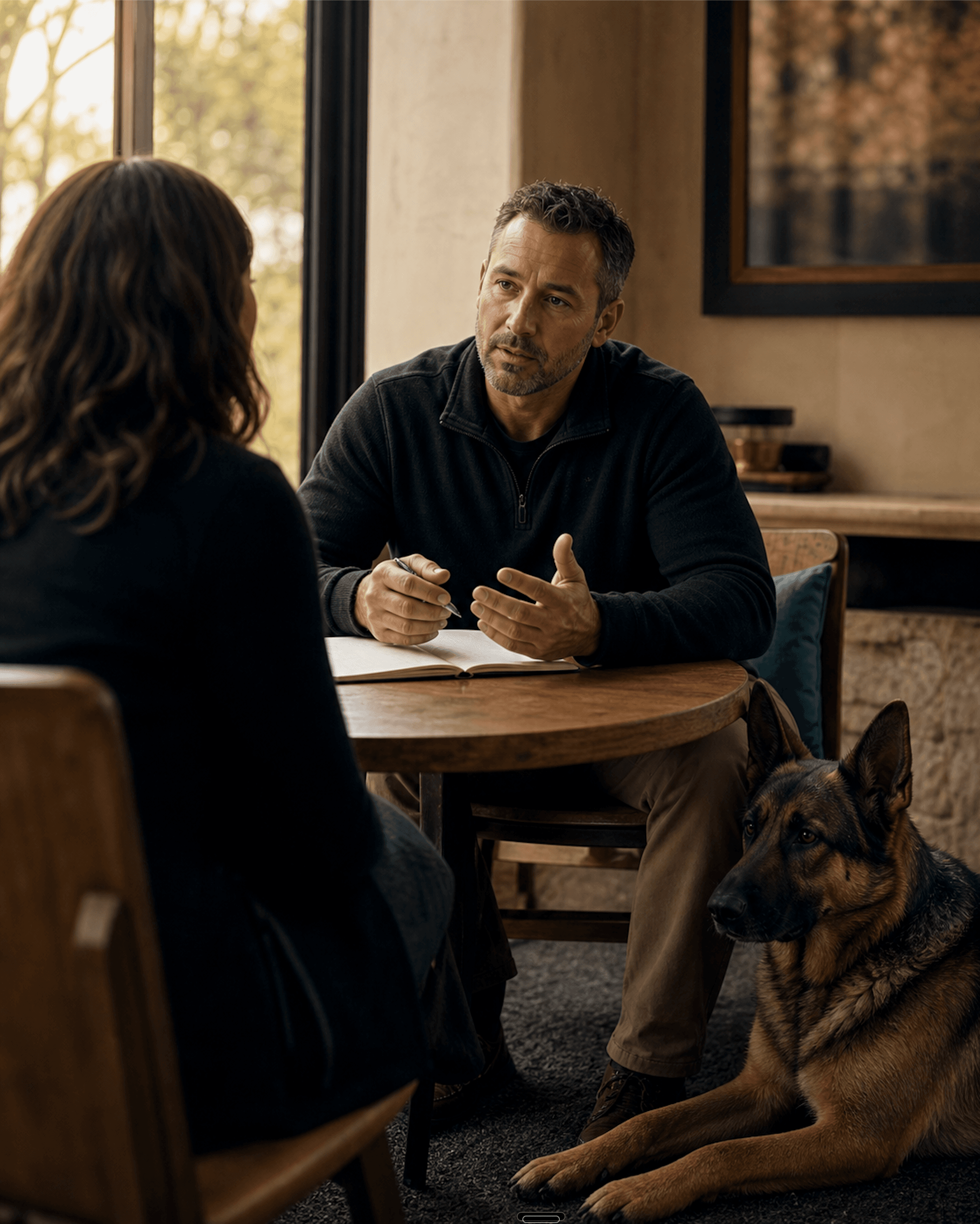
Front Door Impersonation Tactics: How to Verify a Visitor Before You Engage
Learn the front door impersonation tactics used against homes, how to verify visitors without opening the door, and how layered residential security responds.
 By Mark Bosque
Front Door Impersonation Tactics: How to Verify a Visitor Before You Engage
Someone knocks mid-morning. Safety vest, clipboard, a logo you half-recognize, and a reason that sounds ordinary — a meter needs reading, a permit needs signing, there's storm damage two streets over. You have maybe four seconds to decide how to respond, and whoever answers the door in your household may have even less preparation than you do. That gap is exactly what front door impersonation tactics are built to exploit, and it's why residential security has to include the threshold, not just the alarm panel.
These approaches work because they don't feel like threats. They feel like errands. There's no forced entry, no confrontation, nothing that registers as an incident worth mentioning at dinner. Often the visitor doesn't want to get inside at all — they want to know who's home, what's protecting the property, and how the people there behave when someone confident shows up uninvited.
The useful news is that the countermeasures are unglamorous and completely learnable. A short verification standard, one rehearsed phrase, and a household that knows the default answer will handle the overwhelming majority of these approaches without drama.
The Four Roles Impersonators Choose, and Why Each One Works
The cast repeats itself because it works. Four roles show up again and again, and each is built to obtain something different.
The utility or meter inspector wants entry — specifically to interior spaces, basements, and side yards where no one thinks to look afterward. The law enforcement or code official wants compliance, the reflex that stops people from asking a second question. The contractor working "storm damage in the neighborhood" wants sightlines and time on the property: roof lines, alarm placement, gate hardware, which windows are covered. The delivery or survey person wants occupancy patterns or a signature — who is home, when, and whether an adult is present.
That last group points to an important distinction. Some impersonations are aimed at immediate access. Others are pure reconnaissance, and those are far harder to notice, because a person gathering information has every reason to be pleasant. They don't push. They don't need to get inside today. They leave nothing behind that looks like an incident, which means there's nothing obvious to report and no reason for a household to compare notes.
All four borrow the same four psychological levers. Authority — a badge, a logo, a lanyard, a clipboard. Urgency — a leak, an outage, a permit deadline. False familiarity — "your neighbor already signed up," "we were here last spring." Reciprocity — a free inspection, a no-cost estimate, a courtesy check that creates a small social debt.
The person answering the door is usually not the homeowner. It's household staff, a contractor already on site, or a teenager home alone. That isn't a character flaw or a lapse in judgment. Those individuals were never given a verification standard, a script, or the authority to say no without worrying they'd be rude or overstep. That's a protocol gap. Gaps like that are fixable, and fixing them costs nothing but a conversation.
Reading Credentials, Vehicles, and Communication Patterns
Once you know what each role is after, the next question is practical: what actually distinguishes a real visit from a rehearsed one?
Legitimate credentials tend to share three qualities. There's a company or agency name you can independently look up — not a number the visitor hands you, but a listing you find yourself. There's an employee identifier that matches a name someone at the main office can confirm. And there's a stated reason connected to something you already know about: a work order you placed, a notice mailed in advance, a scheduled service window. Compare that against what impersonation usually offers — a laminated card with no verifiable issuer, a generic safety vest, and a reason that sounds plausible but connects to nothing you initiated.
Vehicles and equipment tell a quieter story. Real service crews arrive in marked vehicles with readable company information, often with a plate or unit number, parked where the work is. Watch for unmarked cars left down the block or around the corner. Then look at what the person is carrying. A meter reading requires a meter. A pest inspection requires equipment. An inspection requires paperwork. Someone standing at your door empty-handed, describing technical work, is describing a job they aren't equipped to do.
Communication patterns are often the clearest signal. Note resistance when you offer to call the company back and confirm. Note discomfort with being photographed or having the visit logged. Note pressure to continue the conversation inside rather than at the threshold. And note whether the story holds when you ask a second question — legitimate workers repeat details consistently, because they're describing something real.
Verification rules vary. Advance-notice requirements for utilities, contractor licensing lookups, and posted-ID rules differ by state and municipality, and some jurisdictions maintain searchable license databases while others don't. It's worth finding your local baseline on an ordinary afternoon — which agencies must give notice, where to check a contractor's license, what a legitimate utility ID looks like where you live — rather than trying to learn it at the door.
Verification Without Opening the Door
Knowing the signals only helps if the sequence at the door is settled in advance. That sequence starts with one rule.
The door stays closed while you verify. Not cracked, not chained — closed. Every legitimate visitor, without exception, can wait while you call the company or agency using a number you find yourself. A utility number from your bill. A dispatch line from the official website. Never the number printed on the card they hand you, and never the one they recite from the porch.
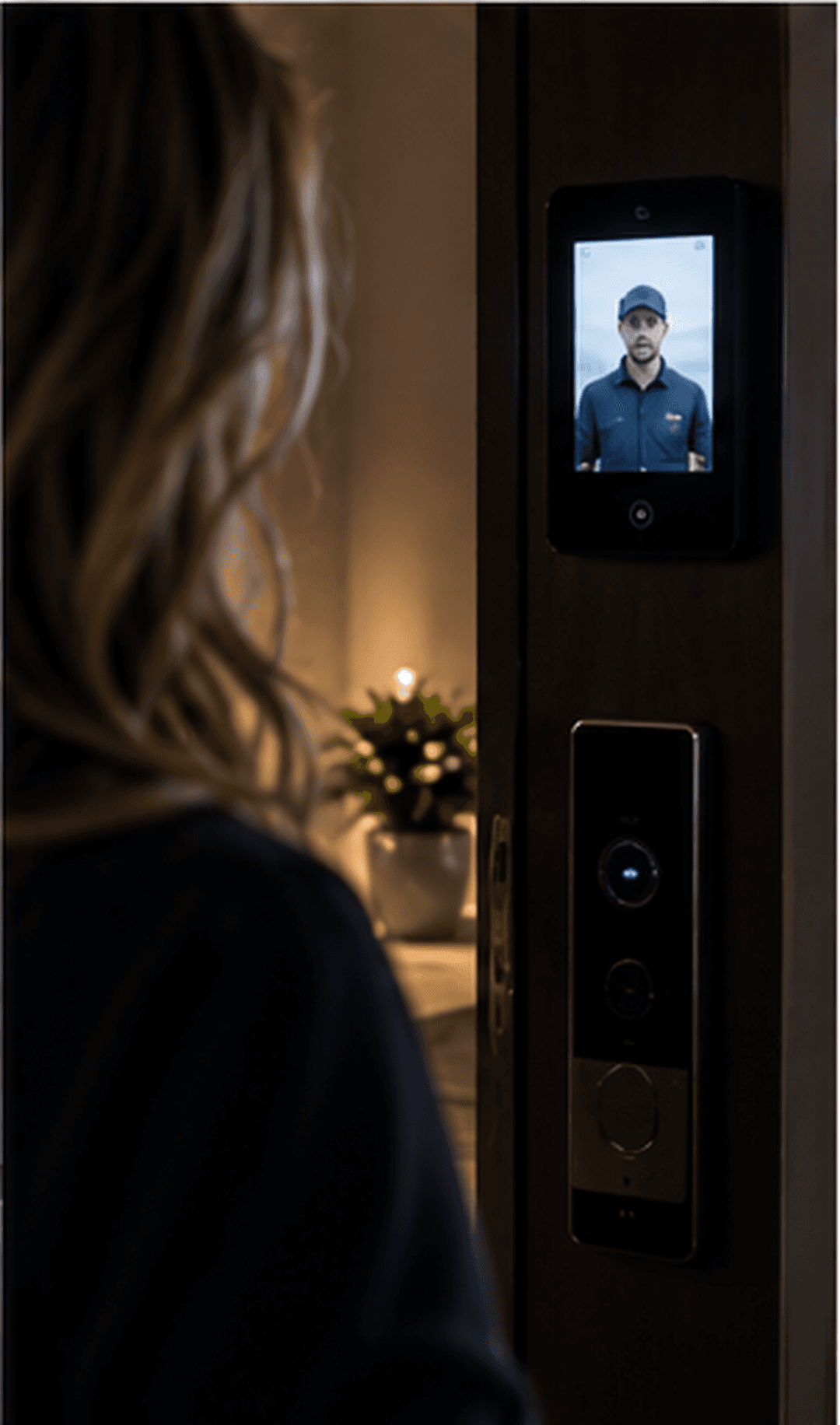
Your camera, intercom, or peephole is a conversation tool, not just a recording device. Speak through it. Ask the visitor to step back from the door so you can see them fully, and say plainly what you are about to do: "I'm going to call the office and confirm this. You're welcome to wait at the sidewalk." A real technician has heard this before. Someone working a pretext often finds a reason to leave.
The hard part, for most people, is the "no." It helps to have one short phrase you can repeat without adapting it to whatever they say next: "Not today, thank you." Then stop talking. You do not owe an explanation, and arguing gives a skilled talker material to work with. Declining costs a legitimate worker almost nothing — they reschedule, or their dispatcher calls you. It costs you nothing either.
After the visit, write it down while it's fresh: date, time, a physical description, clothing or branding, vehicle make and plate if visible, and the exact pitch they used. That last detail matters more than people expect, because pitches repeat across a neighborhood. Report it to your local non-emergency line; patterns only become visible when several households describe the same script.
Then stay alert to follow-up. A phone call or email that references the visit — "our tech stopped by Tuesday" — is a credibility move, using your own memory as proof of legitimacy. Verify it the same way you verified the door: independently, and on your own timeline.
Where the Front Door Fits in a Layered Residential Plan
The front door is where impersonation attempts get resolved, but it isn't where they begin. By the time someone is standing on the threshold with a clipboard and a plausible reason to be there, they've already made several smaller decisions: whether the approach felt observed, how far they could walk without being noticed, whether anyone was likely to answer, and how the household would react if the script fell apart. Layered security works because it interrupts that sequence early — approach and sightlines, camera and access coverage, a household protocol everyone actually knows, and a trained protection dog whose presence changes the calculation before a visitor commits.
A private assessment is useful precisely because it looks at a property the way a scripted visitor would. Where can a stranger see from the sidewalk or driveway? How long can someone linger before anyone registers it? Who in the household typically answers the door, and what have they been told to say — or not say — about who's home, when people return, and what's inside. Most gaps we find aren't equipment failures. They're small habits and unclear defaults that a confident stranger can read in under a minute.
A properly integrated K9 Guardian supports judgment rather than replacing it. The dog provides early awareness — often before a camera notification lands — and visible deterrence that discourages the attempt outright. People and systems still handle the verification: confirming an appointment, calling the company directly, documenting the interaction. That division of labour matters. The dog buys time and attention; the household makes the decision.
The right path depends on the setting. Families benefit most from consistent door protocol that holds when a parent is out and a teenager is home. Executives and estates carry the added complexity of staff, vendors, and public visibility. Schools, clinics, and religious centers see the same impersonation scripts arrive at a reception desk, with more people relying on one person's judgment.
The Takeaway
Front door impersonation works on unprepared improvisation, not on locks. It fails against a household where the standard is already decided: verify independently, keep the door closed, decline in one sentence, write down what happened. None of that requires suspicion of every visitor — it requires a default that doesn't depend on how convincing someone sounds on a given morning.
That default becomes far more durable when it sits inside a layered plan: sightlines that make lingering uncomfortable, coverage that captures the approach, a protocol that staff and family members can actually repeat, and a properly integrated protection dog providing awareness and deterrence at the perimeter rather than at the threshold. The goal isn't a fortress. It's a home where a scripted approach runs out of room early.
If you'd like that reviewed for your own property, household, or organization — quietly and without obligation — request a private assessment.
A private first step
Start with a private conversation about your security.
No two homes, families, or protection needs are the same. We’ll begin with the realities of your life and determine whether a K9XFactor program is the right fit.