Dispensary Security Planning for Cash-Intensive Businesses: A Layered Assessment Framework
How dispensary owners can assess vulnerabilities, size security to cash volume, and integrate K9, personnel, and systems into one coherent protection plan.
 By Mark Bosque
Dispensary Security Planning for Cash-Intensive Businesses: A Layered Assessment Framework
If you operate a dispensary, you have probably already noticed that most security advice available to you was written for a different kind of business. It assumes nightly bank deposits, a card-dominant revenue mix, and a regulator who is not also reviewing your camera retention policy. Dispensary security planning for cash-intensive businesses starts from a different set of facts, and the plans that hold up are the ones that acknowledge that early.
The good news is that this is a solvable problem, and solving it does not require becoming a security expert. It requires knowing what to look at, in what order, and how to tell a real assessment from a sales call.
What follows is the framework we use to think through these environments: how exposure actually concentrates, how to audit what you already have before spending anything, how to size a plan to volume in phases, and how to integrate the layers so they reinforce each other instead of sitting in separate folders.
Why Cash-Intensive Operations Attract a Different Kind of Planning Problem

Start with the structure, not the worry. When banking access is limited or inconsistent, value stays on-site. Deposits happen less often, so cash accumulates in cycles that follow your hours, your delivery schedule, and your reconciliation routine. Those cycles are legible from the outside. Anyone paying attention over a few weeks can form a reasonable estimate of when the building holds the most.
That is a math problem. It is not a reason for alarm, and it is not a statement about your neighborhood. It simply means the planning question is different from the one a retail shop with nightly deposits has to answer.
Three categories deserve separate planning, because they fail in separate ways:
External opportunistic entry. Someone acting on visible pattern and perceived ease. Deterrence and detection matter most here.
Internal shrinkage and reconciliation drift. Small, cumulative, often invisible until an audit or a licensing review surfaces it. This is a process and accountability issue, not a hardware issue.
Transit exposure. The movement between the sales floor, the vault, and wherever counting happens. Transit is where the other two categories overlap and where most planning is thinnest.
The common failure is buying named products before knowing which category the business is actually most exposed to. A camera array, a smart safe, a guard on the door — each is a reasonable answer to a specific question. Purchased as a checklist, they tend to over-solve one category while leaving another untouched. Owners end up with real spend and an uneven posture.
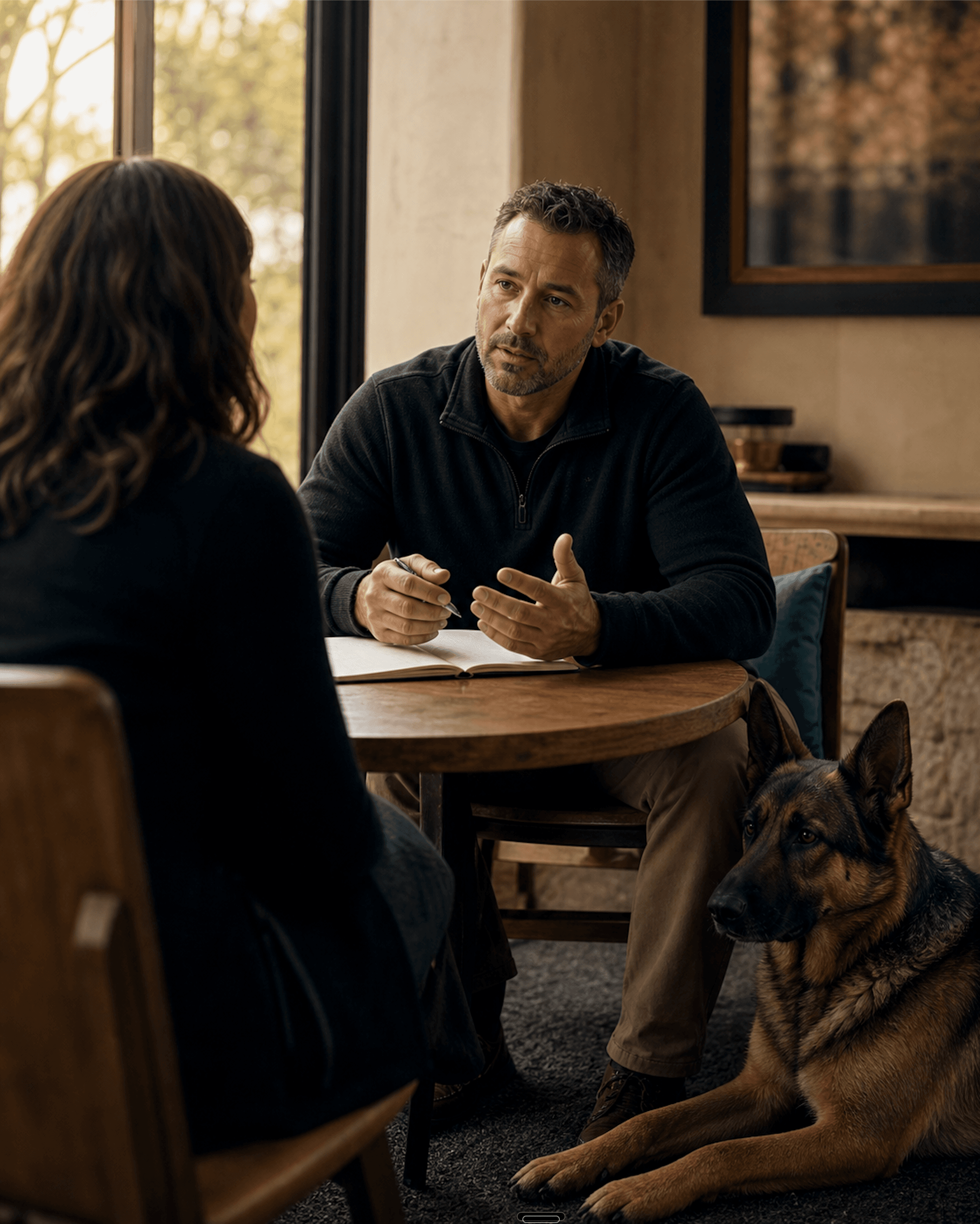
The shift from reactive to proactive is simpler than it sounds. A private assessment establishes a baseline: what the actual exposure is, where it concentrates, and what order the layers should be built in. That baseline is what justifies every later dollar — to yourself, to your insurer at renewal, and to your licensing authority when they ask why you made the choices you made.
A Practical Vulnerability Audit: Assessing Your Current State Before You Buy Anything
Establishing that baseline begins with an honest inventory. Before adding hardware or personnel, map what you already have. The most useful starting point isn't the front door — it's the cash itself.
Trace the money as a sequence of custody transfers: point of sale, drawer, back-of-house count, vault, pickup. At each handoff, ask two questions. Is one person alone with value? Is that moment unobserved? Wherever both answers are yes, you've found an audit priority. Most operators discover two or three of these, and they're rarely where attention has been focused.
Then assess the physical envelope in layers rather than as a single boundary. Perimeter and approach: what can be seen, staged, or waited in. Entry and access control: who moves through, and on whose authority. Interior zones sorted by sensitivity, not by convenience. And the count room as the innermost layer — the smallest space with the most restrictive rules about who enters, when, and with what in hand.
Observation deserves a harder look than it usually gets. Camera count tells you very little. What matters is whether coverage actually captures the custody transfer points you just mapped, whether retention is long enough to survive a discovery that comes weeks late rather than the same afternoon, and whether anyone reviews footage on a schedule. A system consulted only after an incident is a record, not a deterrent.
Finally, test the human layer honestly, because predictability is the vulnerability most audits miss. Opening and closing routines that run to the minute. Delivery windows that never vary. Staff arriving in a recognizable order, parking in the same spots. How much of that pattern is legible from the street, from a neighboring lot, from a phone across the road?
Write down what the audit surfaces before you evaluate any solution. A private assessment built on that inventory produces layered security that addresses your actual gaps — rather than a well-equipped facility with the same three quiet moments it started with.
Sizing Security to Cash Volume: Building the Plan in Phases
With the gaps written down, the next question is scale. Most dispensary security budgets are built against average daily revenue. That's the wrong number. What matters is peak on-hand exposure — the largest amount of cash and product sitting on site at one time — and when those peaks predictably occur. A shop whose exposure triples around holidays, harvest drops, and long weekends needs a plan that flexes into those windows, not a flat posture calibrated to a slow Tuesday. Map your calendar first. The plan follows the calendar.
From there, build in phases.
Phase one closes procedural and access gaps. Who holds keys, who has after-hours entry, how deposits are timed and varied, how the back-of-house is separated from the sales floor. This work costs very little and eliminates the openings most often exploited.
Phase two adds detection, monitoring, and hardened storage — sensors, recorded coverage with retention that actually survives an investigation, and a safe rated to your real exposure rather than your opening-day exposure.
Phase three adds active deterrence and specialized transit measures as volume grows.
When evaluating vendors, you don't need a security background — you need discipline. Ask for verifiable licensing and insurance, not claims. Ask for references from operations comparable to yours in size and product type. Any serious provider will conduct a private assessment before quoting; a firm that prices over the phone is selling equipment, not protection. Get service-level commitments in writing, including response times. And ask directly what the solution does not cover. Honest answers here tell you more than the proposal does.
On deterrence: a professionally trained protection dog with a qualified handler changes the calculation for anyone surveilling a location. Cameras document. A K9 Guardian and handler present a variable that surveillance can't reliably plan around. But that only holds when the dog is matched to the environment, integrated with your staff and systems, and layered onto sound procedure. It is never a replacement for the procedural work in phase one.
Integrating the Layers: Roles, Response, and Documentation That Does Double Duty
Layers fail at the seams. The most common gap we see isn't a missing camera or a weak door — it's an unclear owner.
Assign accountability structurally, not personally. The general manager owns the security plan and the vendor relationships that support it. Shift leads own custody transfers and reconciliation at every handoff. Staff own access discipline and the habit of reporting anomalies early, before they look like anything. Each role needs a documented backup, named in advance. A plan that depends on one person being present is not a plan.
Response thinking follows the same logic. Safety of people comes before property, always and without qualification — that principle should be stated plainly enough that no employee has to interpret it under pressure. Beyond that, establish a designated post-incident sequence covering preservation, notification, and documentation, and keep the specifics internal. Schedule the debrief in advance rather than calling it after the fact. What surfaces there belongs in your next private assessment, not in a folder.
Here is where documentation earns its keep. Cash-intensive operators are already producing records for state compliance. The same access logs, reconciliation variances, camera retention confirmations, and incident files answer questions from three audiences at once: the regulator verifying compliance, the insurer underwriting your risk, and the banking partner conducting ongoing due diligence. Financial institutions serving this sector carry heavy monitoring obligations, and operators who can demonstrate disciplined controls make those relationships easier to keep. Security documentation stops being overhead and becomes evidence of a well-run business.
Then close the loop. Layers reinforce each other only when they share information. Audit findings, footage review, reconciliation variances, and K9 Guardian and personnel reports read together tell you something none of them tells you alone — a pattern in timing, a repeated variance at one station, a door propped during the same window each week.
Set a review cadence and read them in the same room. Filed separately, they are records. Read together, they are early warning.
Where This Fits
Dispensary security planning for cash-intensive businesses belongs to the organizational protection path — the work of protecting a site, a staff, and a license at the same time, with layers sequenced deliberately rather than assembled after an incident. The operators who do this well are not the ones who spent the most. They are the ones who knew their own exposure before anyone quoted them a price, and who built in an order they could explain to a regulator, an underwriter, and their own team.
That clarity is the deliverable. Everything else is implementation.
If you'd like a discreet, site-specific look at where your exposure actually concentrates and what order the layers should be built in, request a private assessment.
A private first step
Start with a private conversation about your security.
No two homes, families, or protection needs are the same. We’ll begin with the realities of your life and determine whether a K9XFactor program is the right fit.